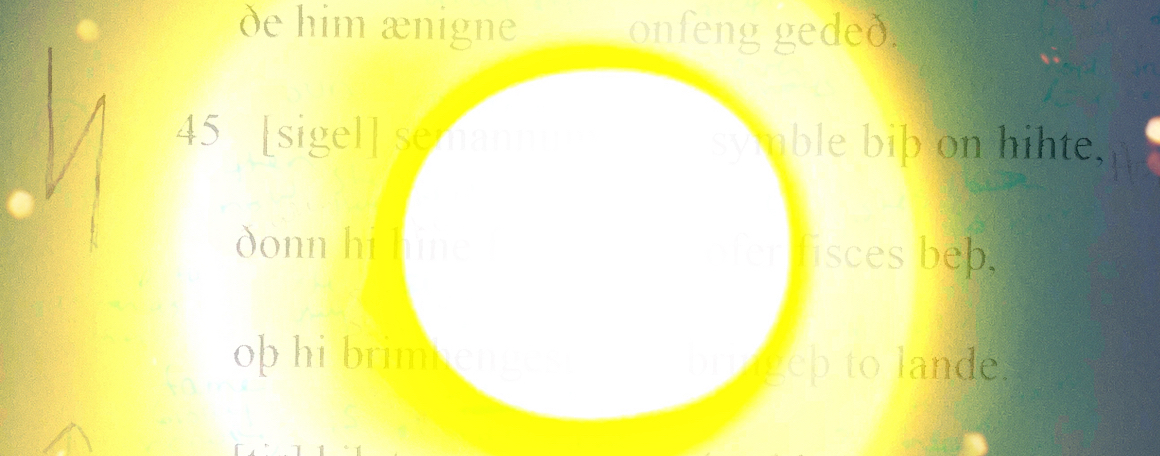
 The answer to this riddle is the sun, though when you read it it could be something else related to seafaring. Semannum, more commonly spelled sæmanum, means mariners, plural, people in boats on the sea. Such people this stanza tells us, are always hoping for the answer to this riddle. They expect it too: hihte means joy as well as hope, but in the sense of an expectation of joy with elements of trust and comfort, which might otherwise be lacking in the cold and perilous waters of the North Sea.
Much of the time sæmanum is used to mean a general sailor, but it is also a word for invaders by sea and by the ninth and tenth centuries became a word for Viking. In the Old English poem “The Battle of Malden,” about a Viking attack that happened in the year 991, the Vikings were called sæman. But … More
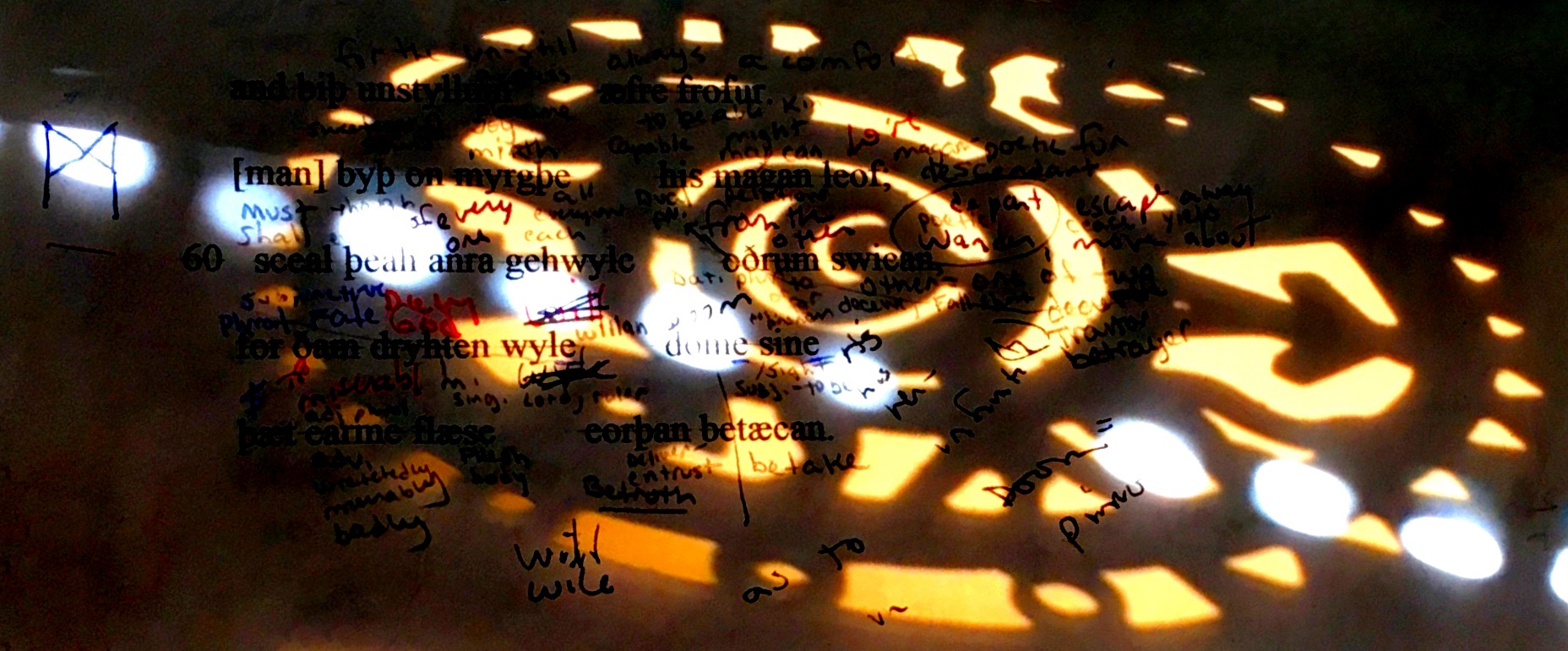 In Old English, a mann is a human being of any gender, translated into modern English as anyone, they, people, a citizen, a human. Mann is not a male person here, so when you see Mann as the name of this rune, it does not mean man as in male. Most correctly it can be either Person or Human but I need to pick one: Human. Person says more about ourselves as bodies. We carry things on our person, we are a person in a room. We are also a human in a room, but we do have a collective human nature, a human understanding, and human sensibilities. Human is a word that suggests the connection we have from our shared experience of being people in the world. It’s a choice that feels right to me as an answer to
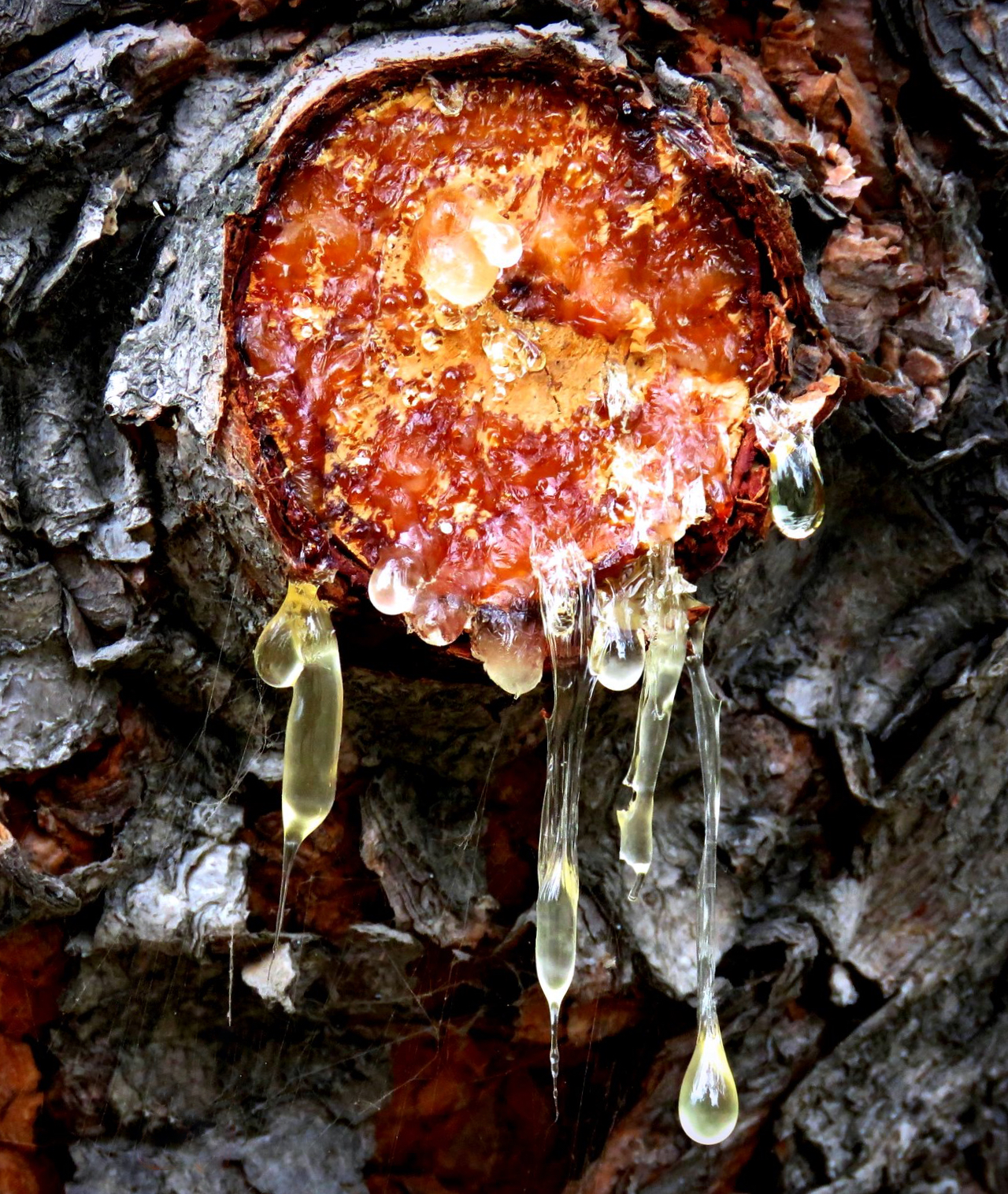 Find a pine tree, a nice sticky one full of resin, that stuff will burn in rain. Look for dead branches, go for one near the base of the tree and cut it off as close to the trunk as possible. You’ll know when you find a good one.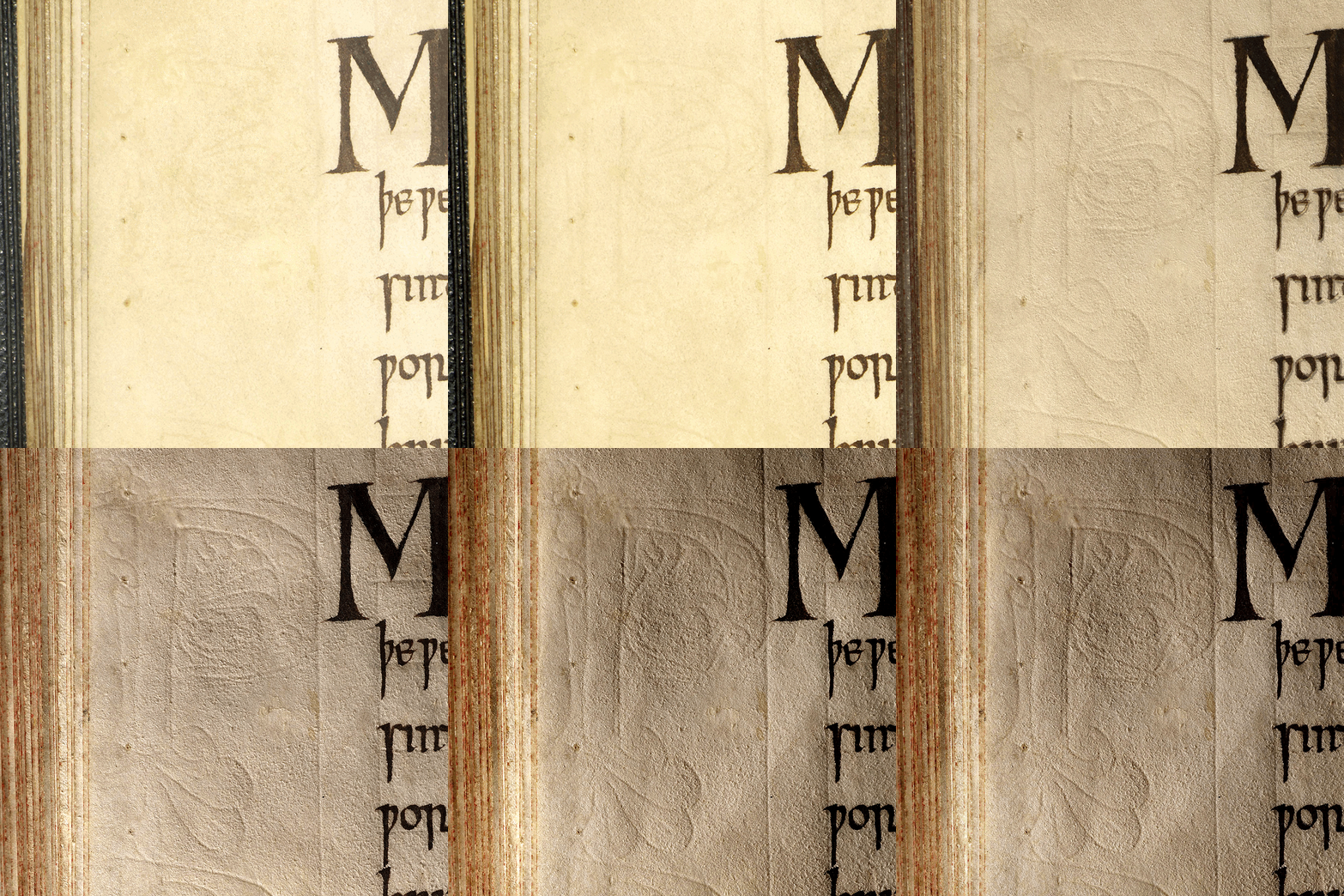
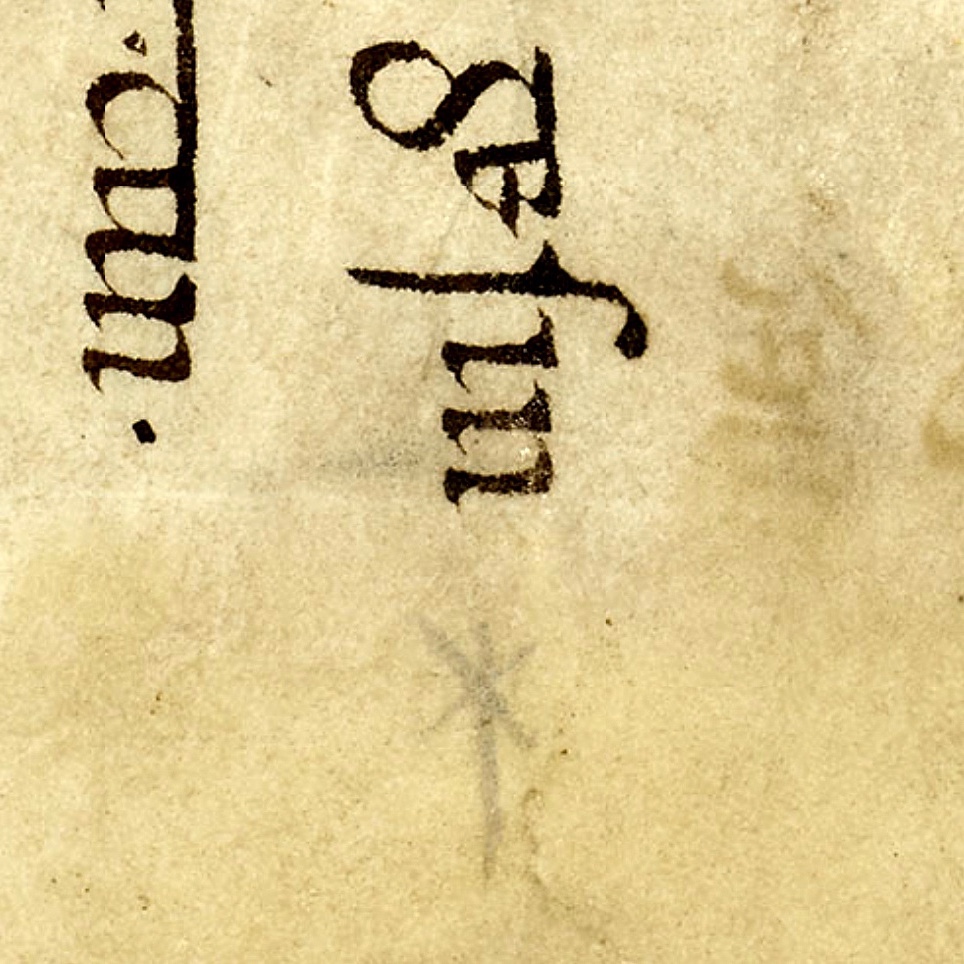 Well this is weird. Here’s what’s happened. At the start of The Exeter Maxims I part C, we get a window into how runes were once used, so I wanted to include it somewhere in Letters for Titles. I thought there’s plenty of places to put it, and I did work it into the first draft of
 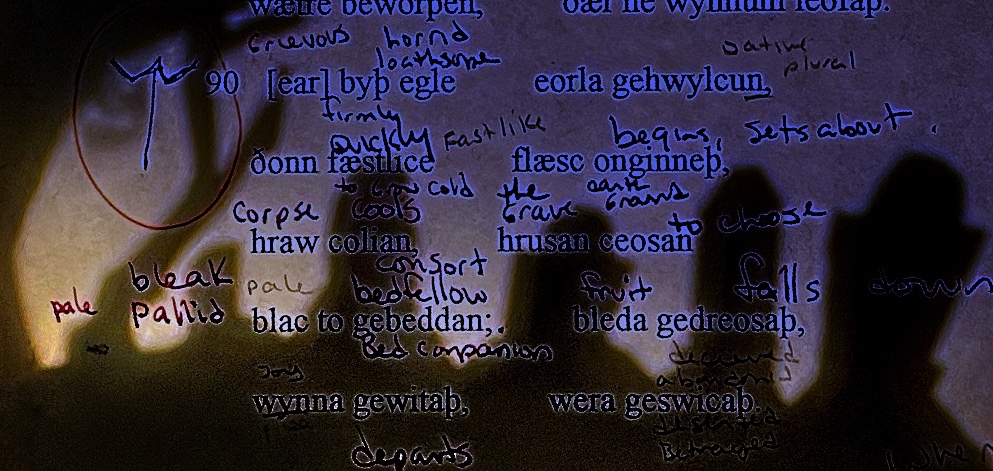 Old English uses very few words at a time, but in all the minimalism there’s a massive amount of meaning: often multiple meanings of the same word are intended, black is sometimes white, and frequently there’s a pun in there somewhere. To translate Old English we need to use more words than the original, and still it’s difficult to pack all that meaning back in. Translation fills graveyards of context and nuance, left behind to grow cold. What is lost by gaining? What do we kill dead? Alliteration and meter, the music makers of language. The beat, deceased, sounds abandoned. Look at this: