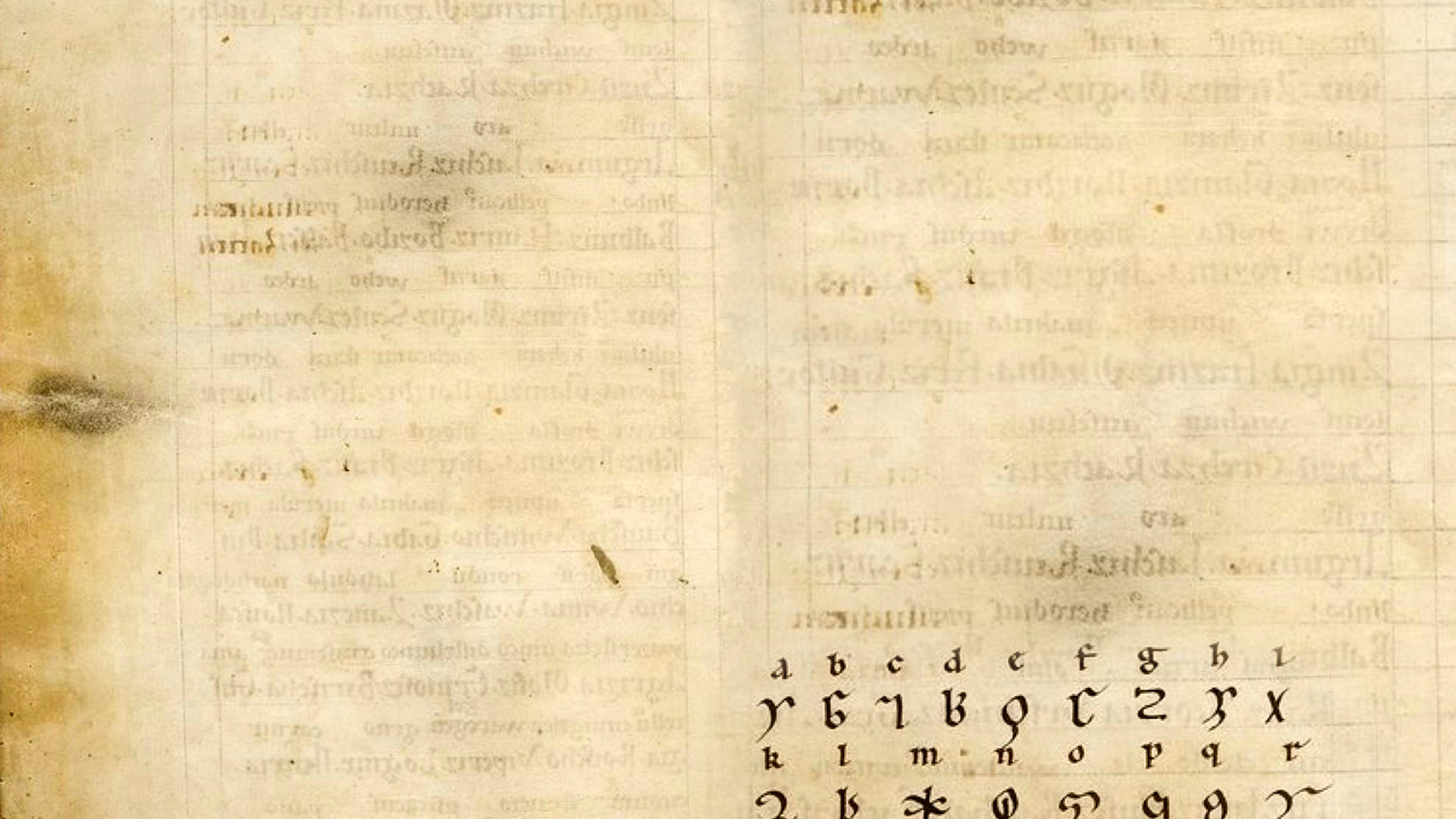
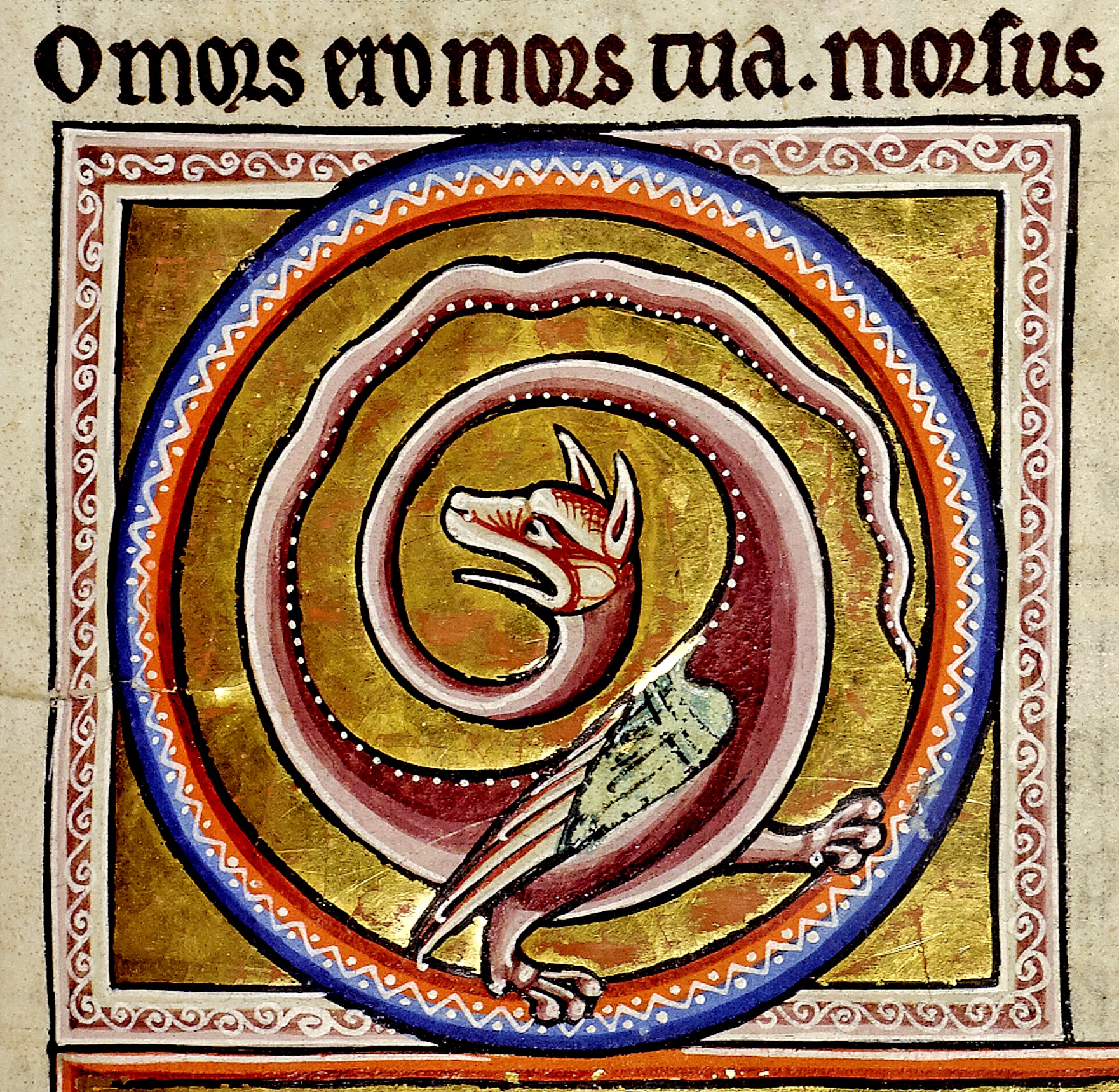
 Turn back, don’t you see? Look where you are. Look at that evil plant spiraling all around this place, sharp, dangerous, don’t grab it no matter how unstable this marshy ground, this quicksand bog will drag you down. Turn around, leave this fen. What are you doing in this home of exiles and monsters, there is nothing here for you. Is there? Who are you? Leave twisted creature. I should leave. I’ll leave. I will turn back and go the way I came.
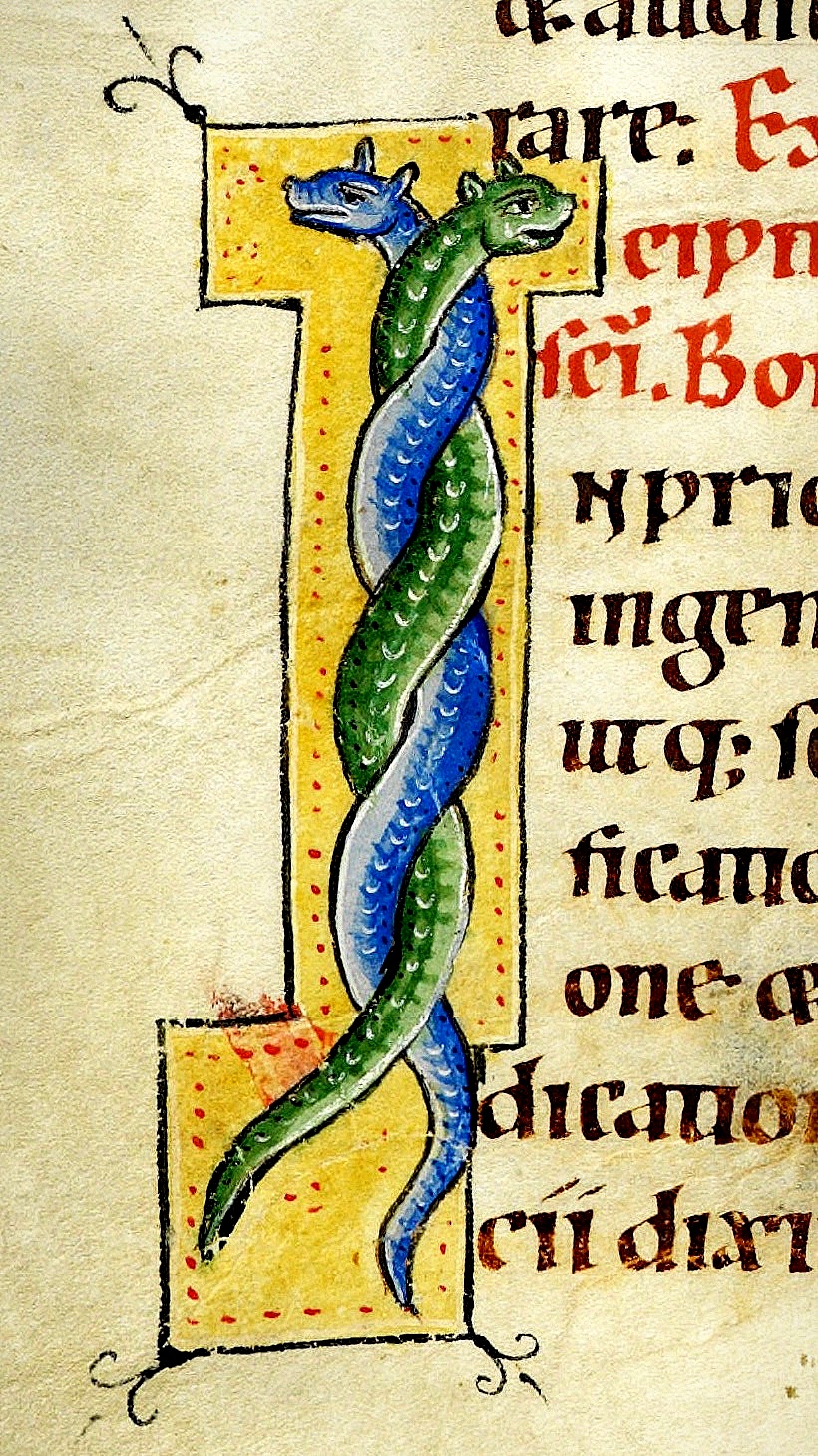
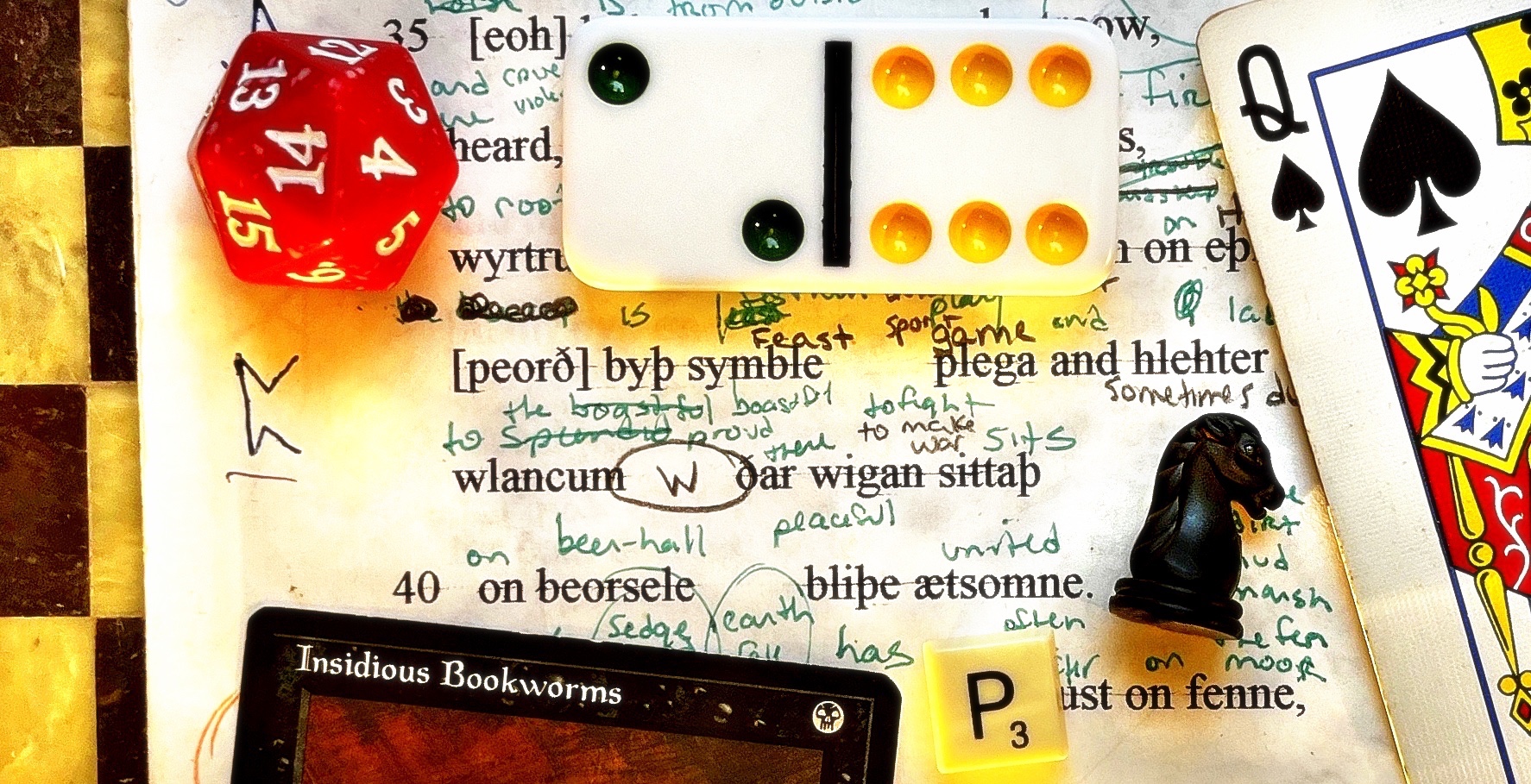 Nobody knows what this is for certain. The only time we ever see the word peorð in Old English is in lists of rune names, so we only know what the Rune Poem riddle says, that
 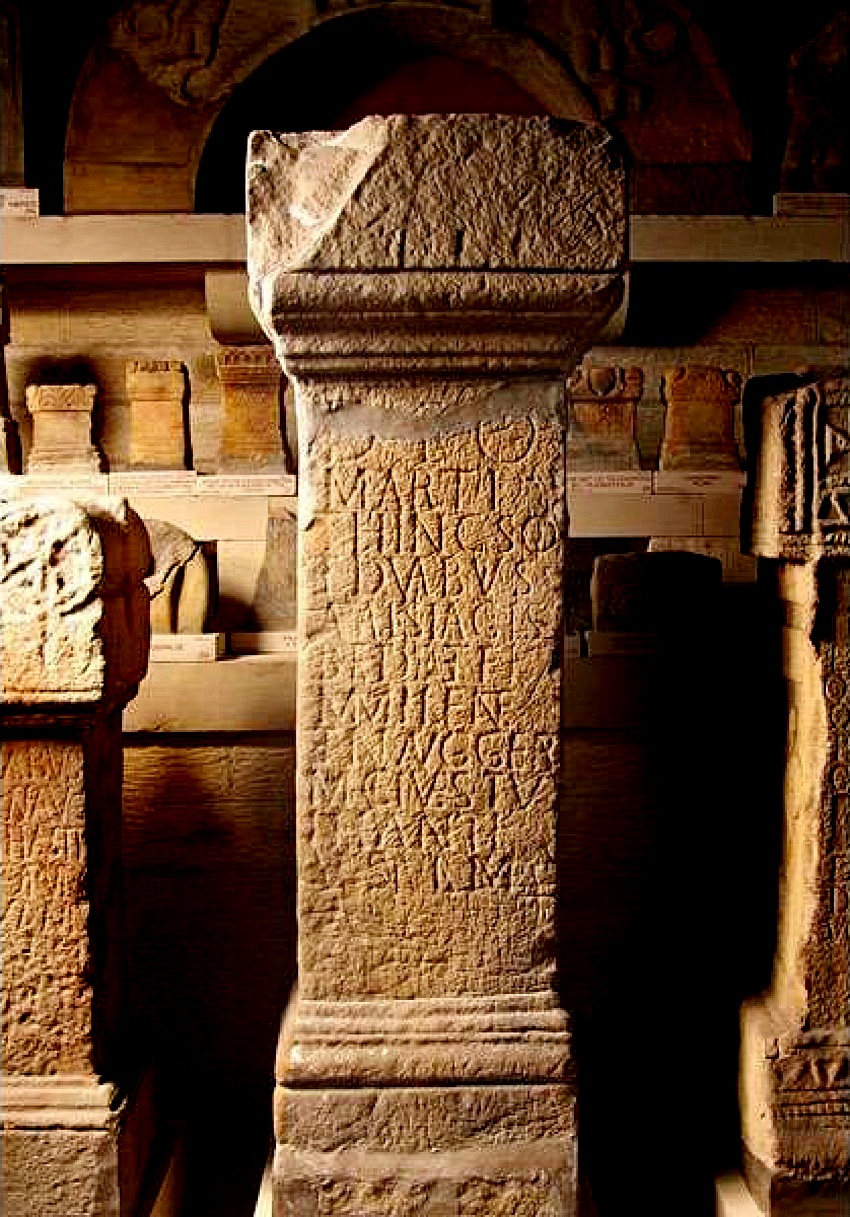 During the height of the Roman occupation of Britain, Britannia was as Roman as anywhere else in the empire: filled with
 An eorl is an earl, a noble person, sometimes a relative of the king, who acts as a local governor within a king’s domain. Eorl is the same word as the Old Norse jarl, meaning a hereditary chieftain, then later a noble person holding a rank just under the king.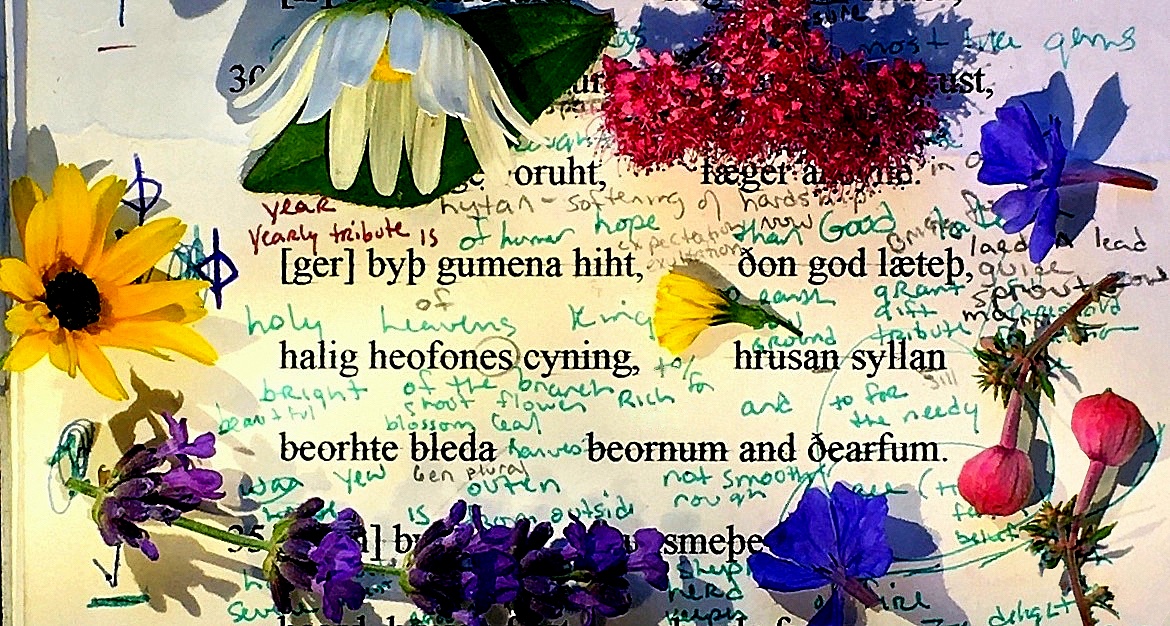
 H: At the start of an Old English word, H is almost silent,
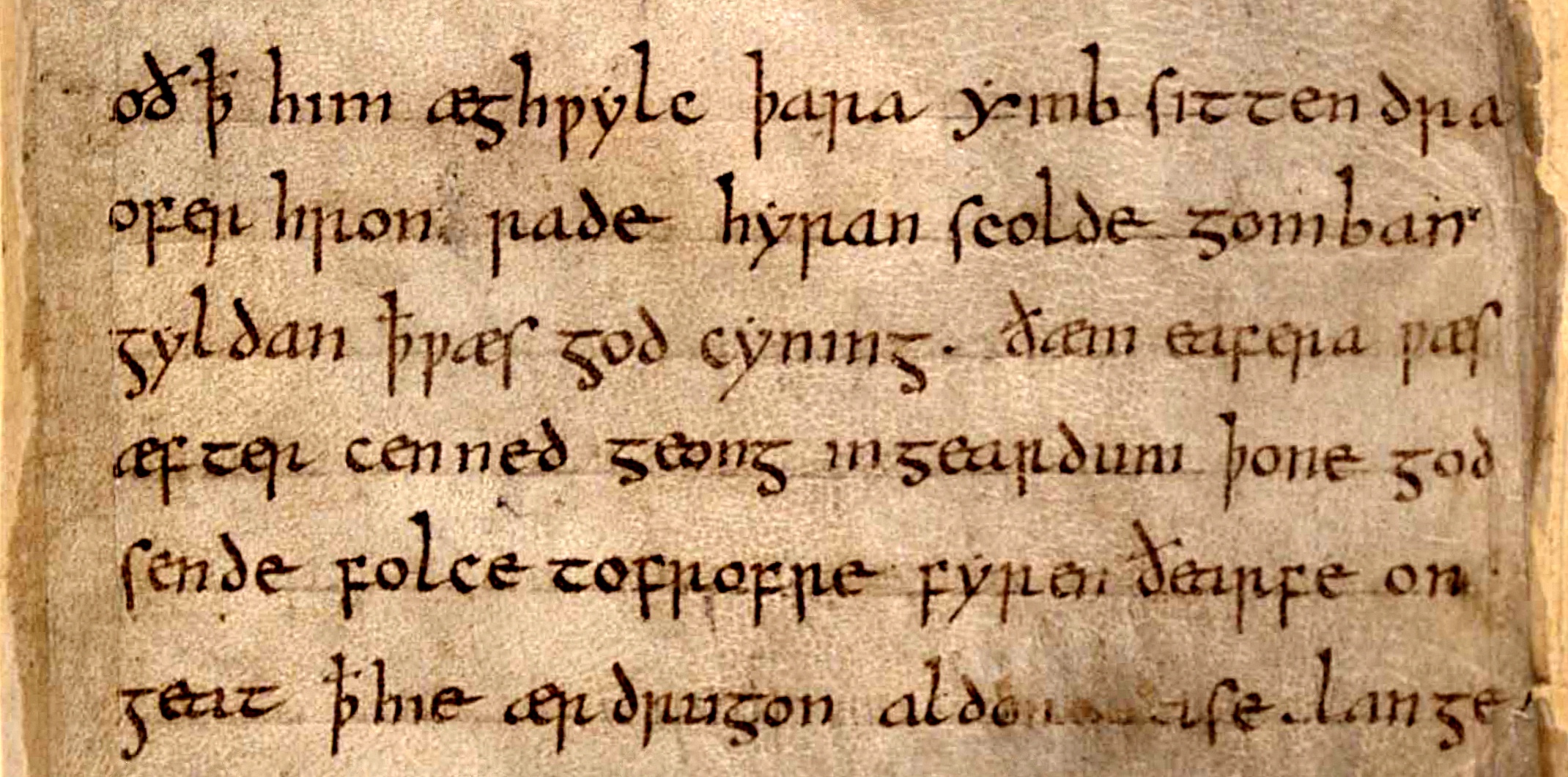 Your hand hurts. Your non-ergonomically correct work station is giving you all kinds of scoliosis. You are low on ink and

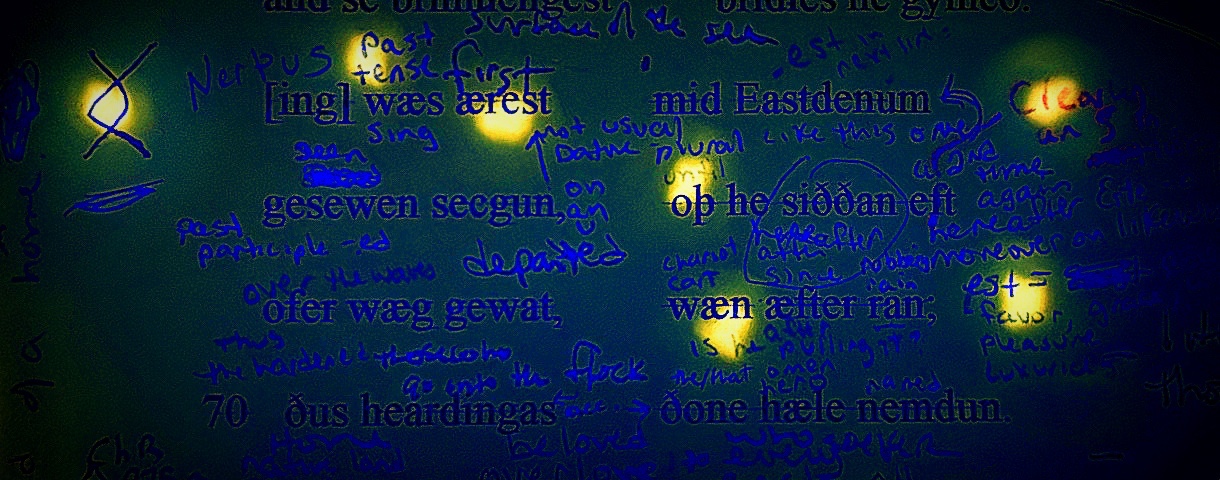 Ing is a mystery. Who is Ing? Where did he go? Why did he leave? We don’t know. You know who knows?
 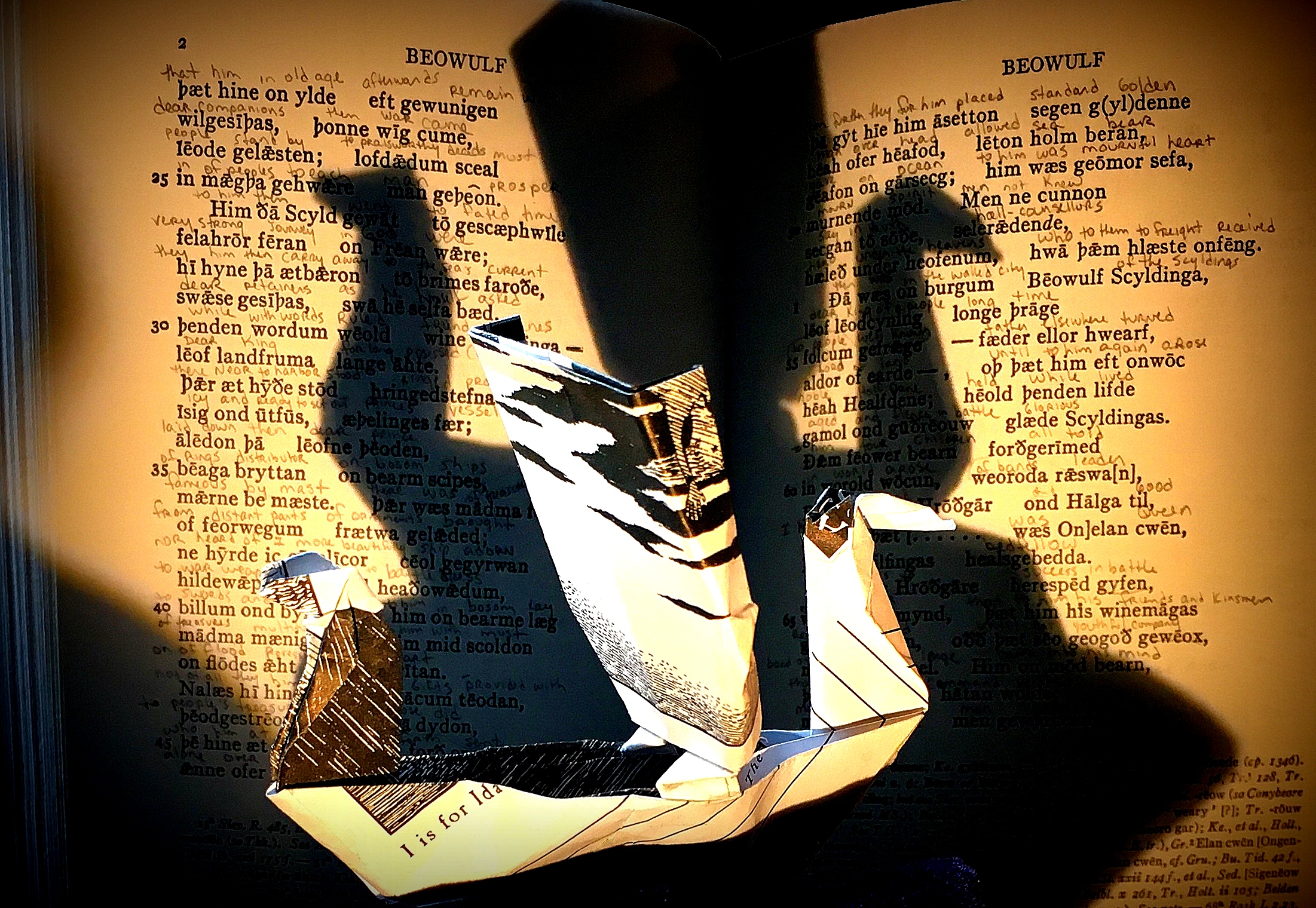 To them then Scyld went, at the fated time, on a journey full of exploits, to God. Then they carried him away to the surf on the shore, his beloved companions, as he himself asked, while he ruled with words, friend of the Scyldings. The beloved first of his land long had possession. There near to harbor stood a ringed prow, icy and ready to set out, a prince’s vessel. Then laid down the beloved chief, the giver of rings, on the ship’s bosom famous by its mast. Of treasure there was much, ornaments brought from distant parts. I had not heard of a ship more beautifully adorned with war weapons and battle dress, with blades and armor. For him, on his body lay a multitude of treasures, that with him must into the flood’s possession, far depart. They provided him with no lesser gifts than the people’s treasures, then those did, who at his …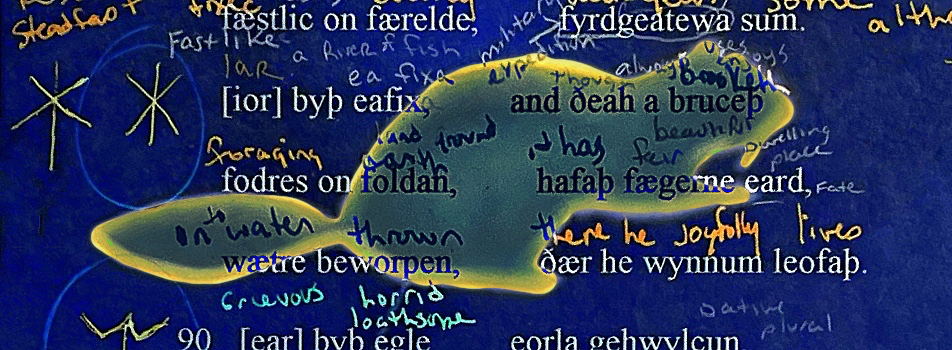
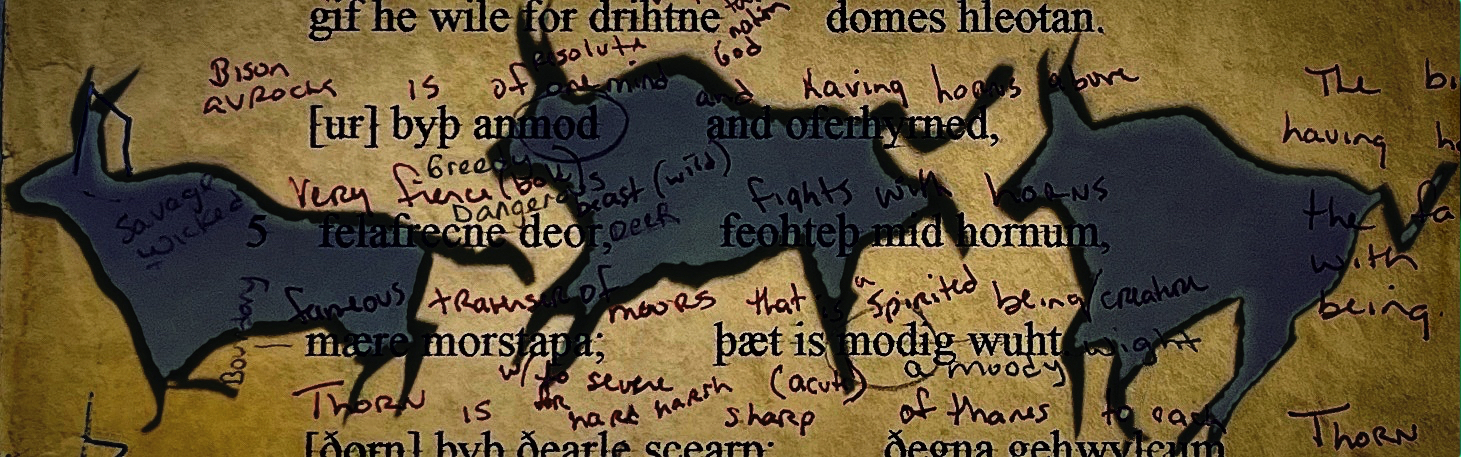 Ur, the aurochs, is a wild bovine, like a cow but not a normal cow. Dangerous. Think of the fiercest cows you know: the toro bravo they use for bull fighting, or the Jersey dairy bull which is particularly unpleasant. Gather them together,
 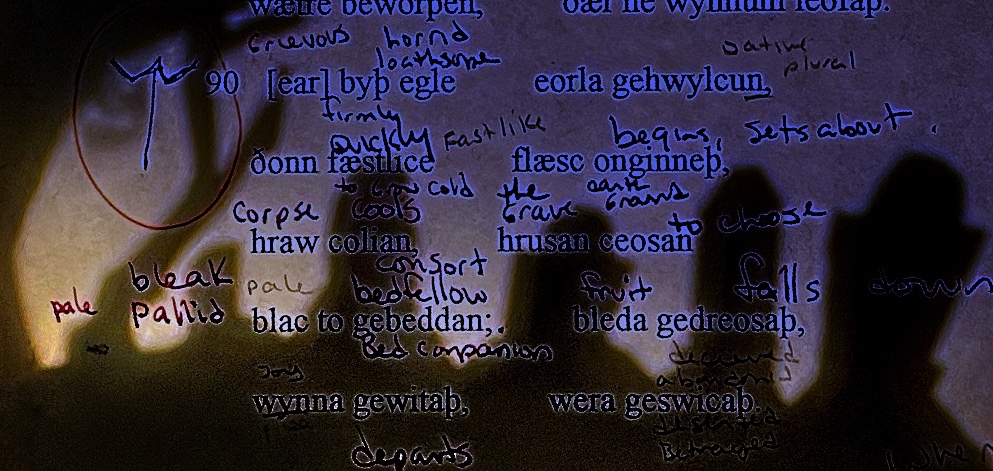 Old English uses very few words at a time, but in all the minimalism there’s a massive amount of meaning: often multiple meanings of the same word are intended, black is sometimes white, and frequently there’s a pun in there somewhere. To translate Old English we need to use more words than the original, and still it’s difficult to pack all that meaning back in. Translation fills graveyards of context and nuance, left behind to grow cold. What is lost by gaining? What do we kill dead? Alliteration and meter, the music makers of language. The beat, deceased, sounds abandoned. Look at this: