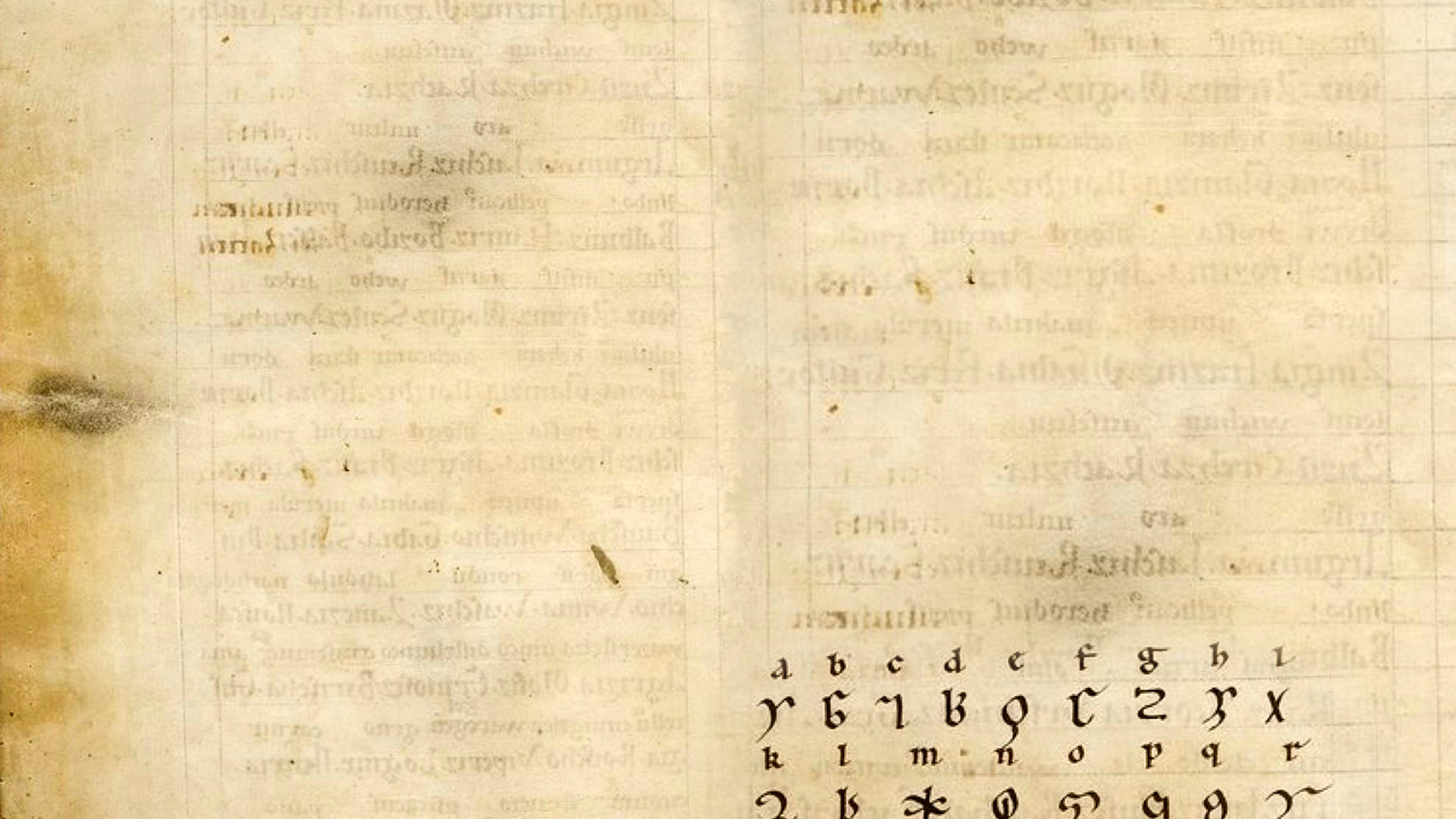
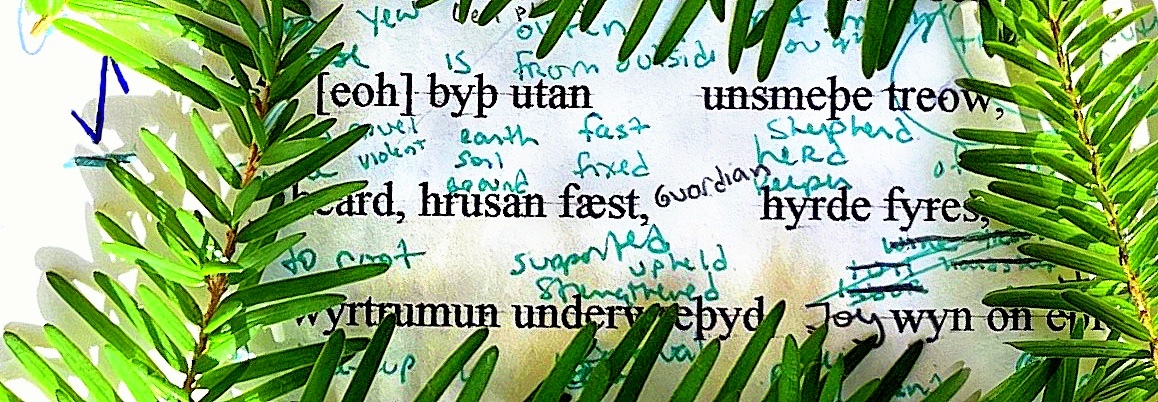
 A tree does not show up in the Rune Poem unless it is important. You think they’ll let just any tree grow in these sacred woods? No. These are the god trees. Useful too. The oak grows here, you can eat the nuts, feed them to the pigs, make a drink from them, make boats from the wood, and the elders used to revere it as the world tree. The actual world tree is here too, the ash, also useful for making spears that won’t shatter on impact. Nice straight grained strong wood, that, holds it all up. The birch is a calendar tree, the first to green up in spring so you know the new year has come. You can eat the new shoots, tap it for the sap which makes a nice drink, and it provides twigs for divination. Everybody wants to know the future. And here we … More

Tag Archives: The Grave
The Future
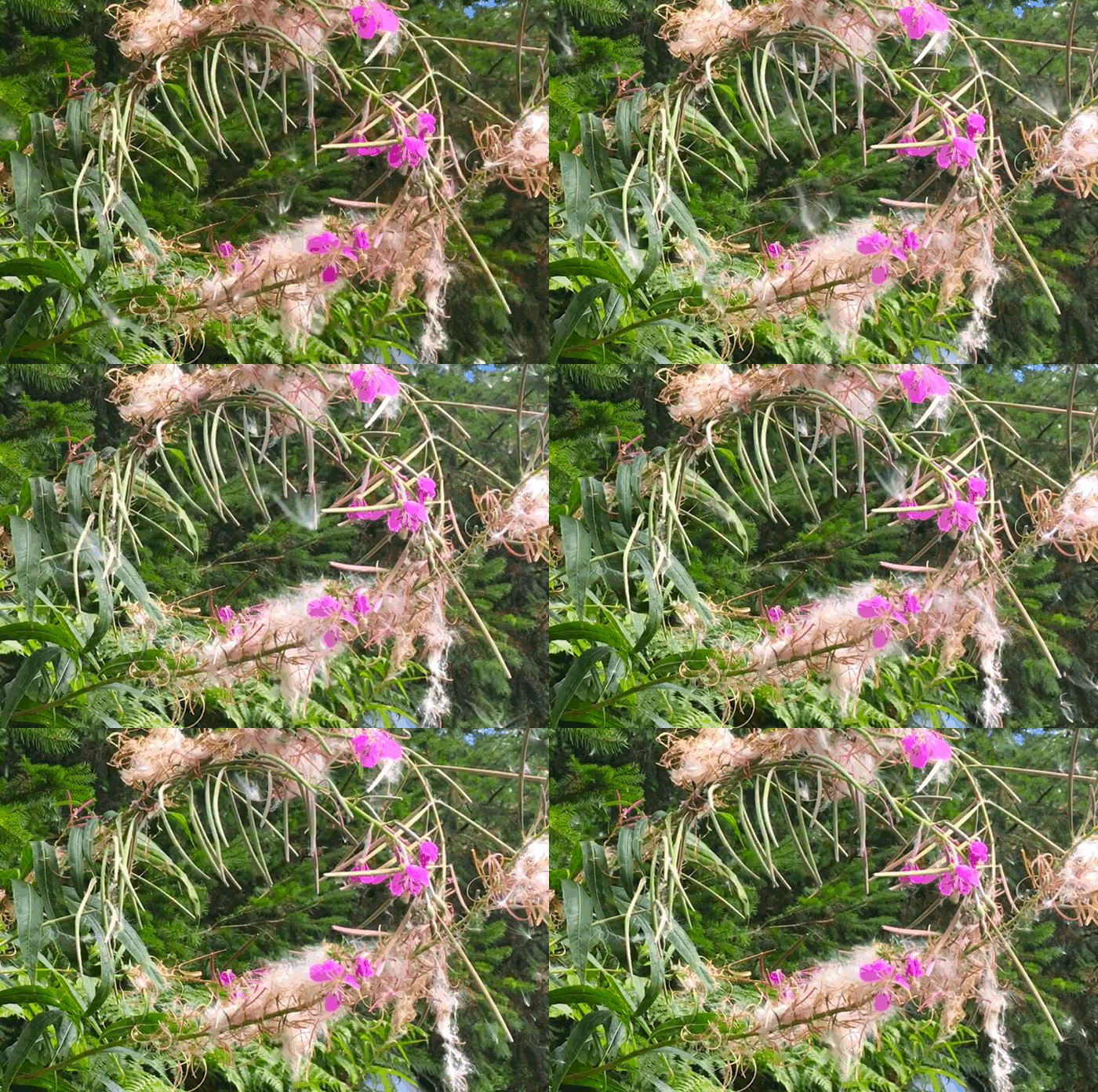
You can’t have a society without a collective understanding of time. You can’t. Show me one. Time is the basis of everything: our idea of shared reality, what we think happens after we die, every question of faith, every approach to proof, everything. There are great similarities from culture to culture about the big mathematical details. For example, some have noticed that the sun moves the distance of its own radius every minute, it’s why we have a minute. It’s in the stuff we can’t prove and quantify where we can really see the personality of a people.
This pairing of runes, Beorc and Ger, Birch and Year, reveals what happens to a culture’s sense of time when their abundance waxes and wanes rather drastically with their living conditions. These were coastal people whose challenging waters range from confronting to inhospitable. Their cold inland weather has its own difficulties and everything depends … More
Life and Death
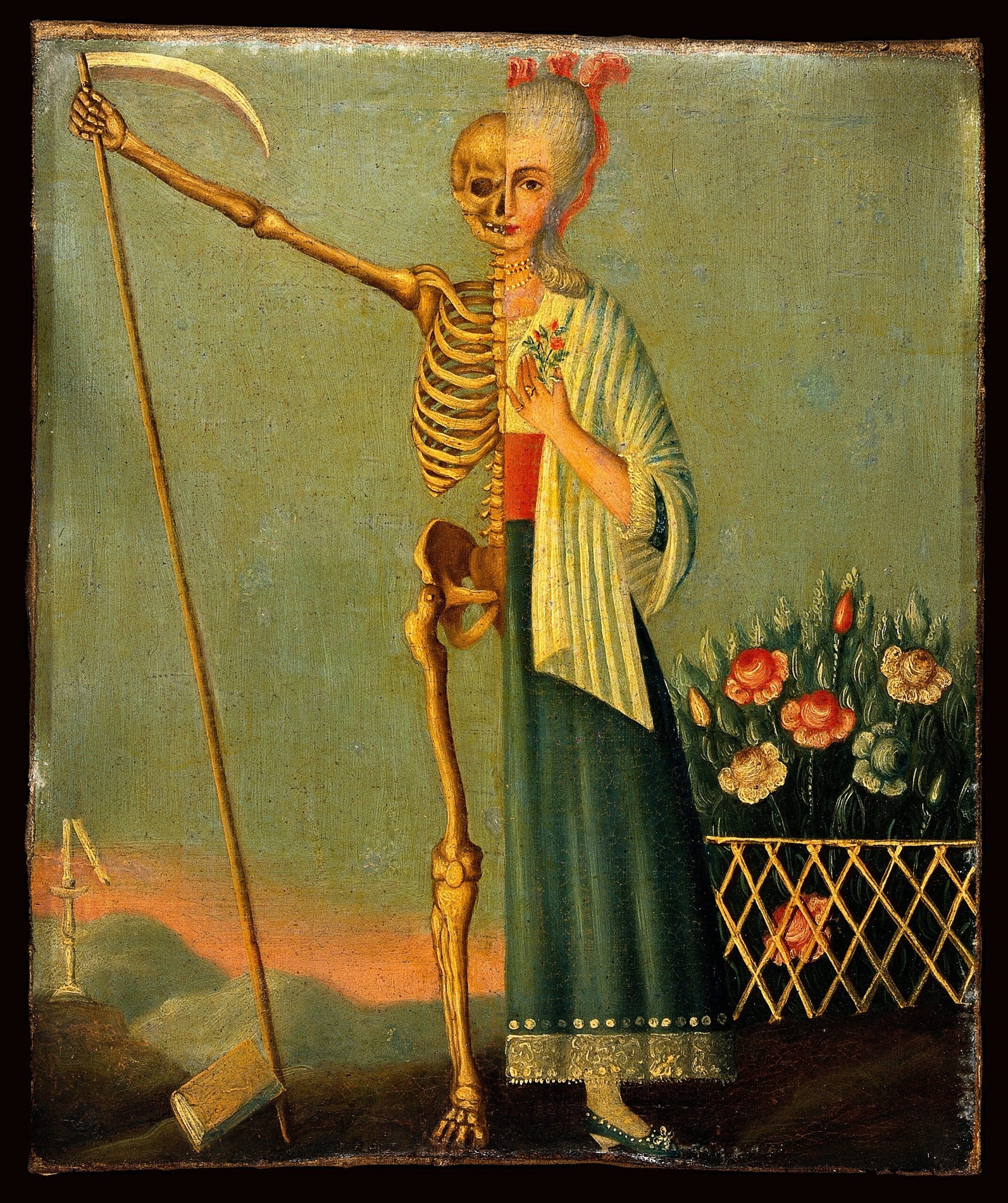 The Rune Poem stanzas Wealth and Human have so much in common they ought to be a matched set, except they already have their own partners, The Grave, and Need. Here are Wealth and Human repeating themselves:
Wealth: Sceal ðeah manna gehwylc (though each of us must).
Human: Sceal þeah anra gehwylc (though each and every one must).
And look at how many words they share: byþ, gehwylcum/gehwylc, sceal, wile/wyle, ðeah/þeah, drihtne/dryhten, dome/domes, 7 not counting pronouns. The name of the Human rune, manna, appears in the Wealth stanza so let’s count that one too: 8 words in common is a large number, especially when you consider that the Wealth stanza has only 18 words and the Human stanza has 23 if you include ꝥ, which isn’t a whole word but a grammalogue for the … More
Moody Joy
 The rune carvers prized beaver fur and skin, their teeth made a great necklace found sometimes in the graves of women and children and once around the neck of a dog, and by church decree beaver tails counted as fish you could eat during lent. Their castor glands were highly valued and their testicles (possibly still the castor glands but mistaken for testicles) cured disease. Because they were valuable for so many reasons, beavers were an overhunted and dwindling population during the time of the rune carvers.
The aurochs were already extinct in Britain by the time the runes were introduced, gone by the end of the bronze age. They still lived on the European continent, though rare, and they were important in Britain for the extremely high value of their horns. The people would carve them and inlay them with silver, and pass them down to their children as ealdgestreon, ancient treasure, which of … More
Stanza 29: The Grave
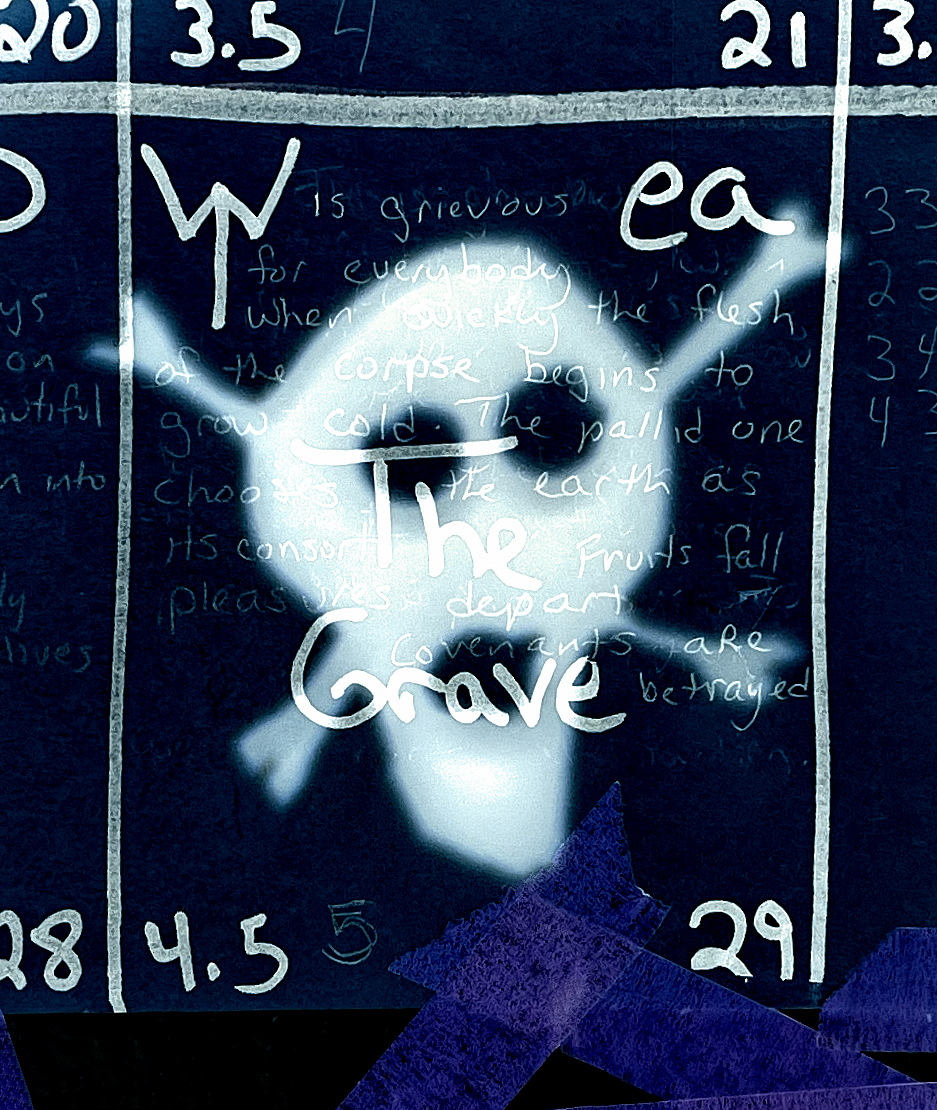
ᛠ byþ egle eorla gehwylcun.
ðonn fæstlice flæsc onginneþ.
hraw colian hrusan ceosan
blac to gebeddan bleda gedreosaþ.
wynna gewitaþ wera geswicaþ ᛬᛫
It is grievous for everybody
When quickly the flesh of the corpse
Begins to grow cold.
The pallid one chooses the earth as its consort
Fruits fall, pleasures depart, covenants are betrayed.
Translating Ear
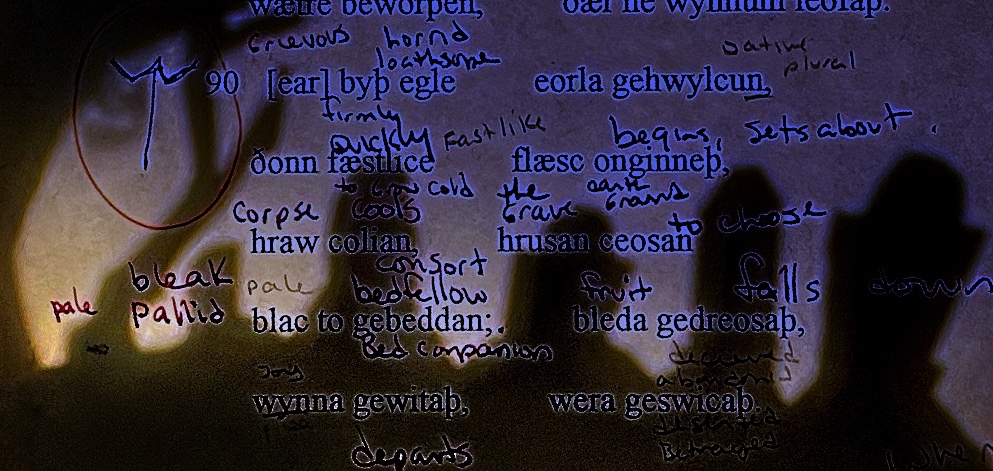 Old English uses very few words at a time, but in all the minimalism there’s a massive amount of meaning: often multiple meanings of the same word are intended, black is sometimes white, and frequently there’s a pun in there somewhere. To translate Old English we need to use more words than the original, and still it’s difficult to pack all that meaning back in. Translation fills graveyards of context and nuance, left behind to grow cold. What is lost by gaining? What do we kill dead? Alliteration and meter, the music makers of language. The beat, deceased, sounds abandoned. Look at this:
blac to gebeddan bleda gedreosaþ
Now say it:
black to yeh-bed-an blea-da yeh-dre-o-sath
There’s some sound in it, listen. Alliteration and beat. Three repetitions of B making a beat and there’s a pause in the middle: two parts sung as one statement. Or a call and response. Old English poetry has a … More
How to Dig my Grave
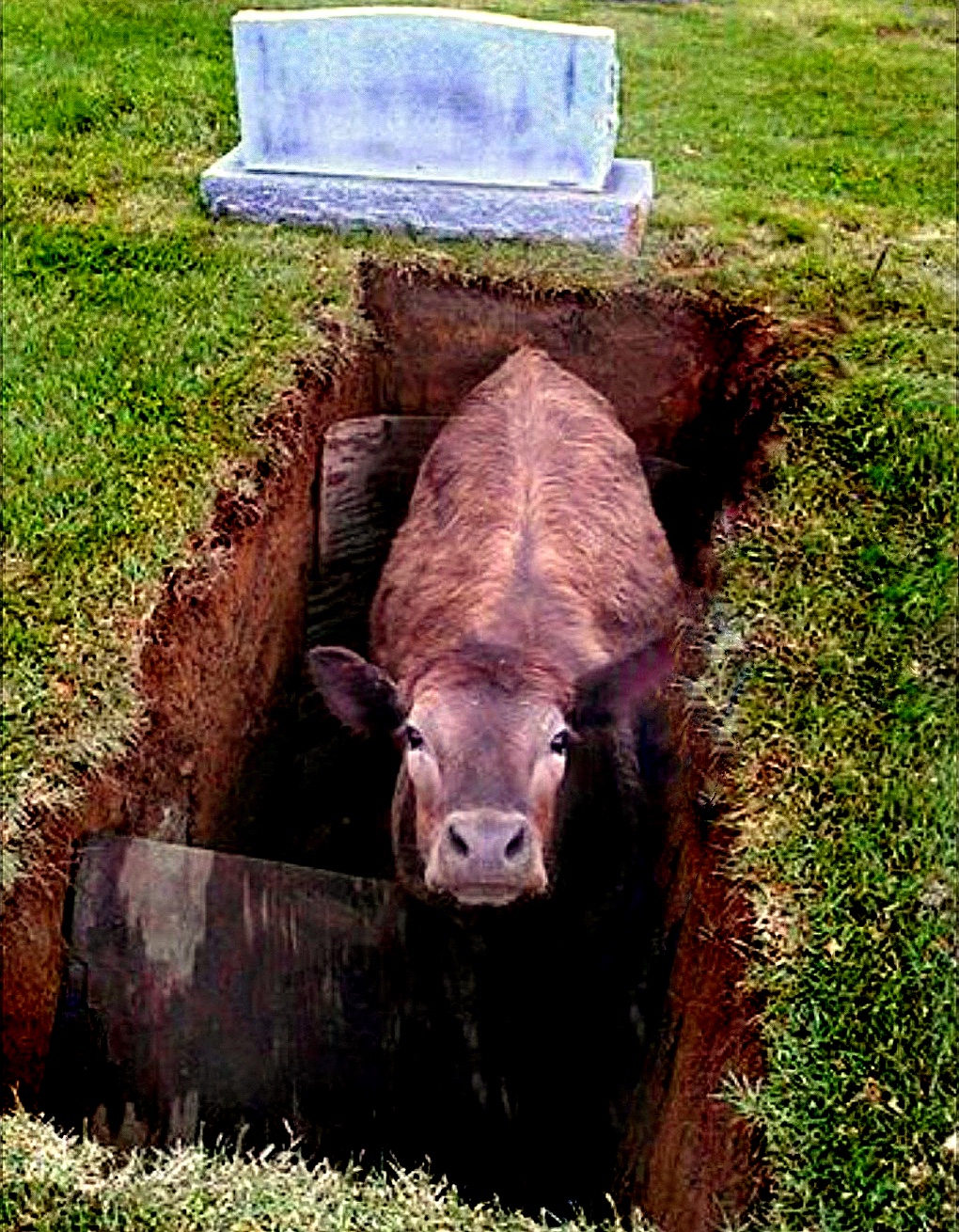 Source a location. Ask yourself, why are you digging my grave? Have you recently murdered me or have I died of natural causes? If murder, you must source both a grave site and a hiding place.
Ascertain the time of year. If the ground is wet, you must find higher ground or you will end up digging not a grave but a small pond as you will surely run into ground water. If the ground is frozen your job will be much more difficult. Best time to dig my grave: summer.
Determine if you will be putting me in a box or will I be wrapped in a blanket or tarp of some sort? Will I have any covering? I am five and a half feet tall, so if using a box you will need to acomodate my height, unless you bury me in a crumpled fashion, then consider my width. A tarp will be … More
Everything is Temporary
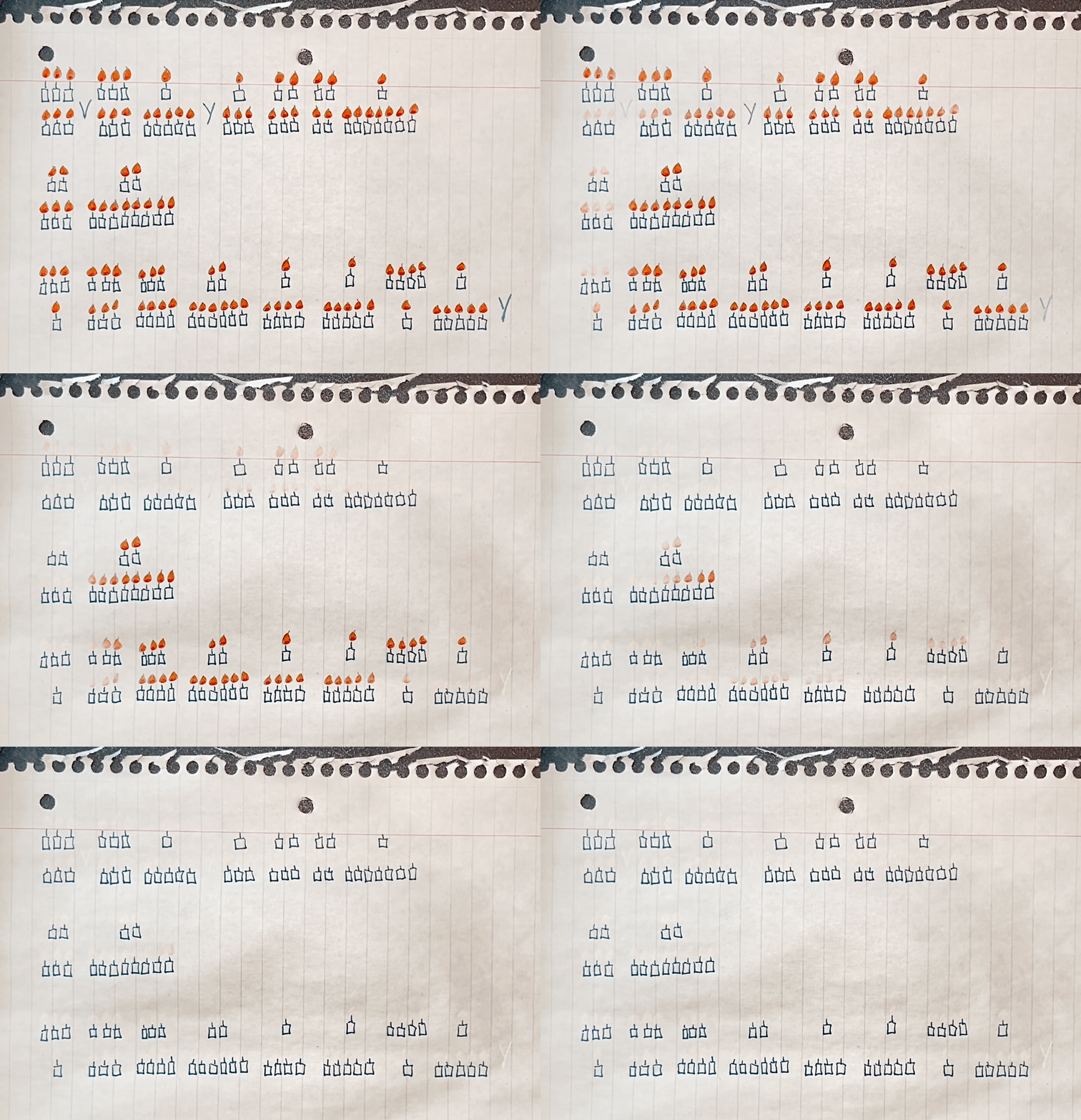 I am so terribly sorry for your loss. I’ll be thinking about you and will light a candle. Please let me know if there is anything I can do for you in your time of grief, while you are in mourning, as you move through this tragic occasion, during your bereavement, it’s so hard to know what to say. You were alive for such a short time too. Eternity will feel much longer, trust me. What will you do now? Can you watch your people while they divide your stuff? Maybe you don’t want to see that. Making piles, what they keep for themselves or can sell, what they slip into a pocket when the other one isn’t looking. Donations by the door, lamps on the floor. Things going into garbage bags. It’s hard to watch. At least you seem to have people. So many die exiled in wretchedness and just imagine that clean … More
How to Die
 First, you must find a reason not to live. There exists uncountable reasons but you must choose at least one and try to make it as ineffable as possible so the people you leave behind may feel suitably at a loss for words when they find you. An added benefit: it will be easier for the people who attend your wake, interment, scattering of the ashes, memorial service, whatever it is it will be none of your business, to speak in hushed and reverent tones if they find themselves capable of speaking at all. Amongst the reasons not to live you might choose: you are suffering from progressive melancholia; by ceasing to exist you will bring your existence to the attention of the person who barely knows you exist, though you maintain a unique awareness of said person’s existence; pondering the great nothingness of everythingness has inverted your thoughts into a perpetual retrospective arrangement.… More
X≠Y≠Z: Rune Casting!
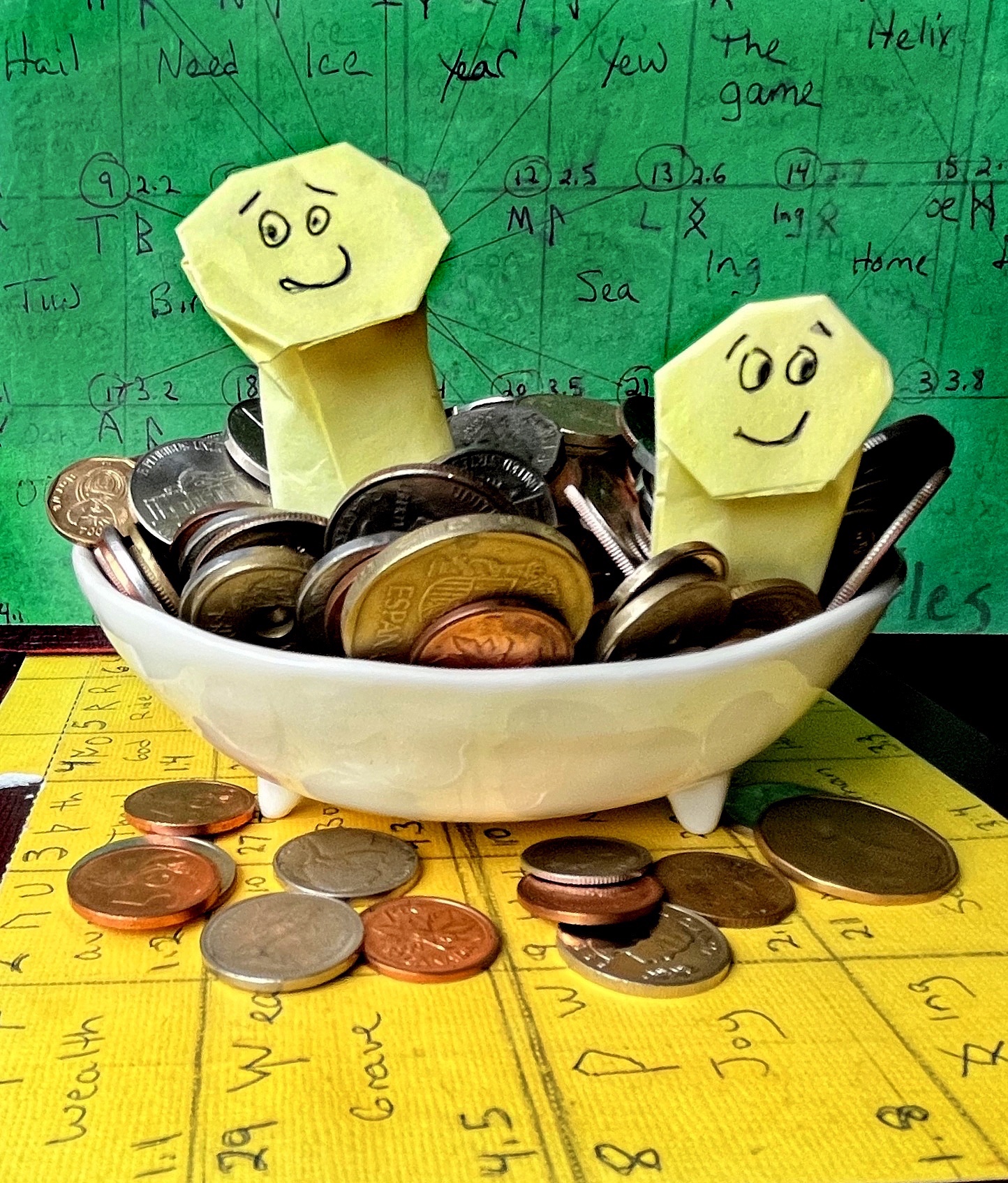 Y: This is our future? Ear and Feoh. Death and cattle? Are we going to kill a cow? Are we meeting some rich cattle?
Z: Wealth. It means wealth.
Y: Wealth? Like lots of cows?
X: Portable wealth, not cows. Nobody pays in cow anymore.
Z: Some do.
Y: How is a cow portable? Imagine it. Pulling it behind you on a leash to go shopping. Loading it up into the car.
X: The smell of the bank.
Y: The smell of the bank! The wealth rune. Wealth!
X: We’ll have money.
Y: Yes! We will be rich! It’s so good to know it beforehand. Cows are big, right, this is big money, beyond our wildest fantasies rich. Yes. Fantastic. Yes. We’ll be swimming in it. Scrooge McDucking it through ducats! Plunging into property!
X: Capering in capital!
Y: Lounging in lucre, washing in wealth! Rolling in bankrolls, piling into pesos, current … More
Rune Casting: Ear
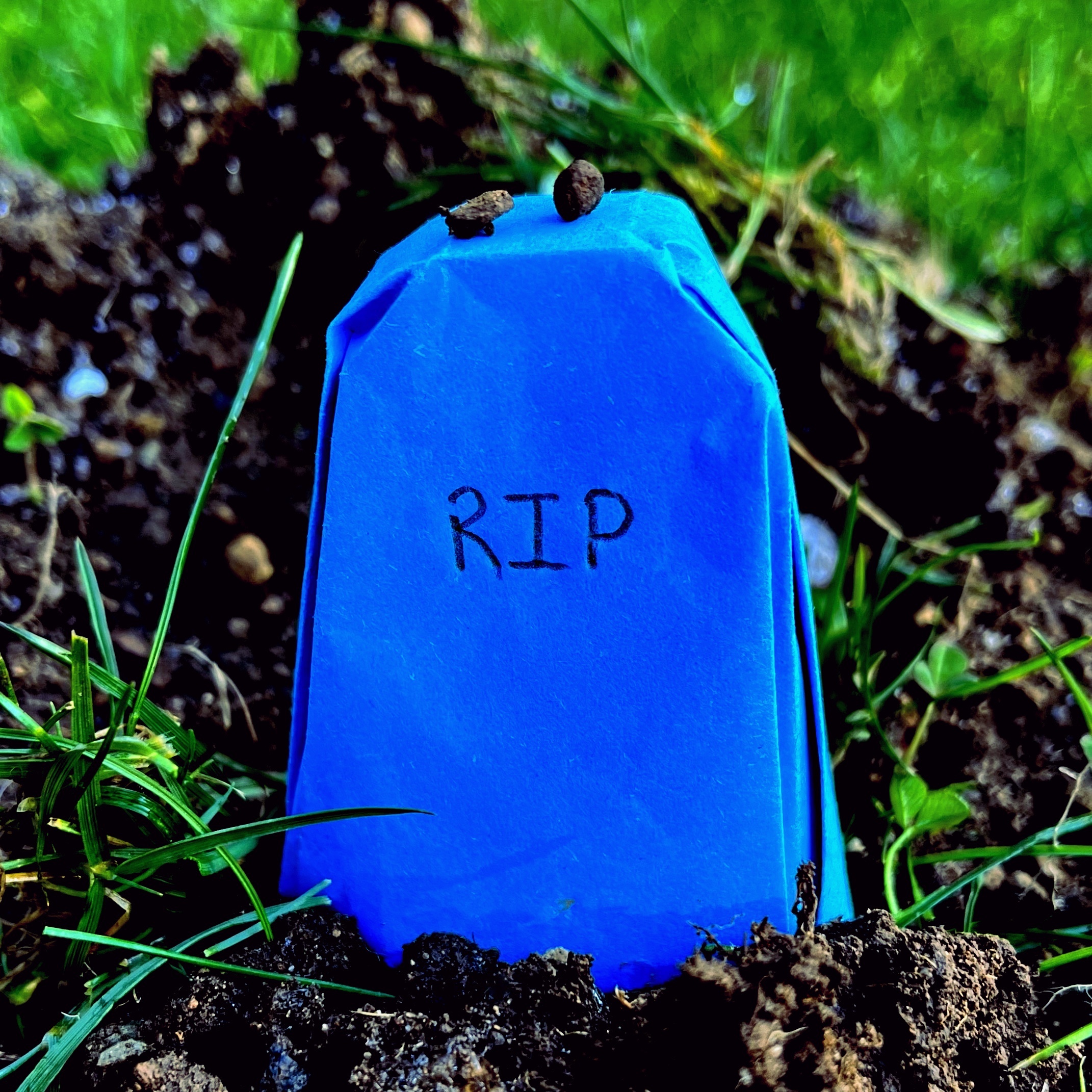 Tell me your future. Tell me, what do you hope will happen before you’re dead? And what is it you are afraid of? Never mind. Doesn’t matter what. The future is not in the what, it’s in the hope and the fear that you hold now, in the present. Whatever it is coming to you, or coming for you, is happening now. In here. In your mind. There is no other future. Well, there is the one thing that is going to happen, Ear says it for sure. It’s coming to you and it’s coming for you. You’ve got it coming. You’ll choose the earth as your consort and sleep together forever. Everything is temporary, except that. That’s carved in stone.